Transshipment Explained: Why Your Car Stops at Another Port Before Reaching You
Transshipment Explained: Why Your Car Stops at Another Port Before Reaching You
November 27, 2026
0 Comments
When importing a car from Japan, buyers often expect their vehicle to travel directly from Japan to its final destination. However, international vehicle shipping does not always work this way.
Sometimes, a vehicle arrives at another port before continuing its journey to the destination country. This process is known as transshipment.
For example, a car shipped from Japan to a Caribbean island may first arrive at a major international port, where it is transferred to another vessel before reaching its final destination.
But why does this happen? Does it affect delivery time? Is it normal for a car to stop at another port during transportation?
In this guide, we explain how transshipment works, why shipping companies use it, and what buyers should know when importing a vehicle from Japan.
1. What Is Transshipment in Car Shipping?
Transshipment is the process of transferring cargo from one vessel to another at an intermediate port before it reaches its final destination.
In international vehicle shipping, this means a car may leave Japan on one vessel, arrive at a connecting port, and then be transferred to another vessel for the remaining journey.
This process is commonly used when there is no direct shipping service between the departure and destination ports.
For example:
Japan → Connecting Port → Caribbean Destination
Instead of travelling directly to the destination island, the vehicle passes through an intermediate shipping hub.
Transshipment is a normal part of international logistics and does not automatically indicate a problem with your shipment.
2. Why Does a Car Stop at Another Port?
There are several reasons why shipping companies use transshipment during international vehicle transportation.
A. No Direct Shipping Route
Not every port has direct shipping connections with Japan.
Some Caribbean destinations have fewer direct international vessel services. Shipping companies may therefore use connecting ports to transport vehicles efficiently.
B. International Shipping Networks
Major shipping companies operate through established networks of ports and connecting vessels.
These networks allow cargo to move between different countries and regions without requiring a direct vessel for every destination.
C. Cargo Consolidation
Shipping companies may transfer cargo at major ports to organize shipments according to their final destinations.
This helps them coordinate vessel capacity and shipping routes.
D. Limited Vessel Availability
Depending on the route and shipping method, a connecting vessel may be necessary to complete the journey.
Transshipment allows shipping companies to serve destinations that may not have frequent direct departures from Japan.
3. How Does the Transshipment Process Work?
Understanding the process can help buyers know what happens to their vehicle after it leaves Japan.
Here is a simplified explanation:
Step 1: Vehicle Departure from Japan
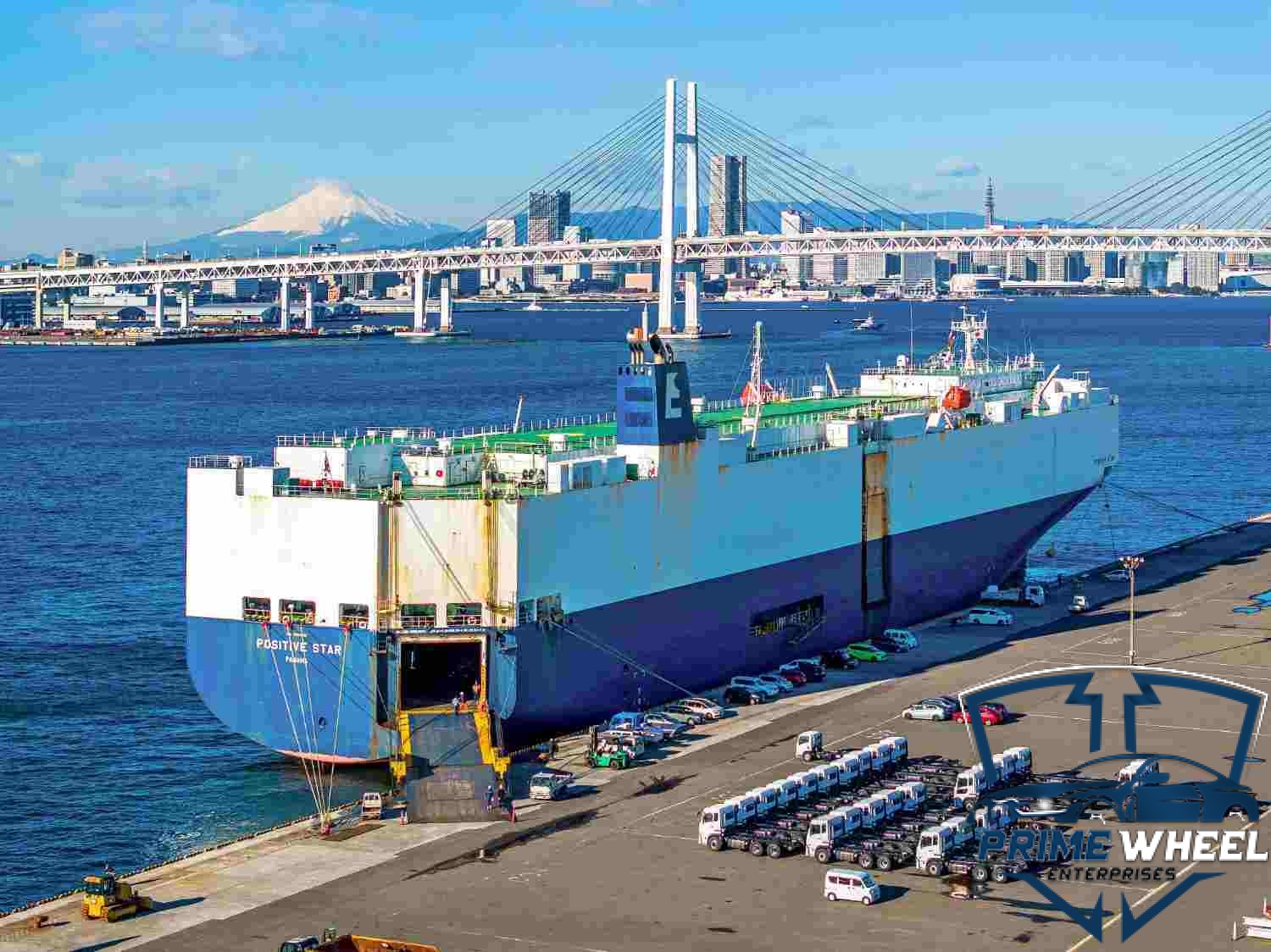
After completing export documentation and port procedures, the vehicle is loaded onto a RoRo vessel or into a shipping container.
The vessel then departs from the designated Japanese port.
Step 2: Arrival at the Connecting Port
The vessel reaches an intermediate port that serves as a transshipment hub.
The vehicle is unloaded or handled according to the shipping arrangement.
Step 3: Transfer to Another Vessel
The vehicle or its container is transferred to another vessel scheduled to travel towards the final destination.
This stage may involve waiting for the next available connecting vessel.
Step 4: Departure Towards the Final Destination
Once the connecting vessel is ready, the vehicle continues its journey towards the destination country or island.
Step 5: Arrival at the Destination Port
The vehicle arrives at the designated port, where the local arrival procedures, customs clearance, and vehicle release process begin.
4. Common Transshipment Hubs for International Car Shipping
International vehicle shipments may pass through major shipping hubs depending on the route, carrier, vessel schedule, and destination.
Some examples include:
Singapore: A major international maritime hub connecting Asian shipping routes with other regions.
Port Klang, Malaysia: An important regional shipping and transshipment centre.
Kingston, Jamaica: An important Caribbean transshipment hub.
Panama: An important maritime connection between Atlantic and Pacific shipping networks.
Colón, Panama: Home to major container port facilities serving international shipping routes.
Caucedo, Dominican Republic: A major Caribbean container port.
Not every vehicle shipment passes through these ports. The actual route depends on the shipping company and the destination.
5. Does Transshipment Increase Shipping Time?
Yes, transshipment can increase the overall shipping time because the vehicle may need to wait for the connecting vessel.
However, the additional time varies depending on several factors:
Connecting vessel schedules.
Cargo transfer arrangements.
Port congestion.
Shipping company operations.
Weather conditions.
Availability of space on the next vessel.
Some transfers are completed quickly, while others may require additional waiting time.
This is why buyers should always ask for an estimated shipping schedule rather than assuming that every shipment will follow a direct route.
6. Is Transshipment Safe for Your Vehicle?
Transshipment is a standard international shipping practice. However, as with any cargo-handling process, vehicles may be subject to additional handling during transfer.
The shipping method and handling arrangements determine how the vehicle is managed.
For example:
RoRo Shipping: The vehicle is driven or moved between designated vessel storage areas according to port procedures.
Container Shipping: The vehicle remains secured inside its shipping container during the sea journey, although the container itself may be transferred between vessels.
To understand the handling arrangements, buyers should confirm the shipping method and documentation with their exporter or shipping company.
7. How Can You Track Your Car During Transshipment?
Tracking a vehicle during international transportation depends on the shipping company and the type of shipment.
For container shipments, buyers can often use the container number or Bill of Lading details to check shipment updates.
For RoRo shipments, tracking information may be available through the shipping company’s vehicle tracking or customer service system.
You can ask your exporter for:
Vessel name.
Departure date from Japan.
Connecting port details, if available.
Estimated connecting vessel departure.
Final destination port.
Estimated arrival date.
Bill of Lading or relevant shipping reference.
Keep in mind that tracking updates may not be available at every stage of the transfer.
8. What Should You Do If Your Car Is Delayed at a Connecting Port?
If your vehicle is waiting at an intermediate port longer than expected, there is no need to immediately assume that something has gone wrong.
First, request an updated shipping status from your exporter or shipping company.
Consider these steps:
Confirm whether the vehicle has arrived at the connecting port.
Ask whether the transfer to the next vessel has been scheduled.
Request the updated estimated departure date.
Confirm the expected arrival date at the final destination.
Keep your shipping documents and reference numbers available.
If there is a significant delay, ask the shipping company to explain the reason and provide the latest available update.
9. Transshipment vs Direct Shipping: What Is the Difference?
Both methods are used in international vehicle transportation, but they involve different shipping arrangements.
Comparison
Direct Shipping
Transshipment
Route
Direct vessel service
One or more connecting ports
Vessel Changes
Usually no
Yes
Handling
Generally fewer transfer stages
Additional transfer handling
Delivery Time
May be shorter
May take longer
Availability
Depends on direct routes
Can serve more destinations
Shipping Network
Direct connection
Connected vessel network
Neither option is automatically better in every situation. The most suitable route depends on the destination, vessel availability, shipping cost, and schedule.
10. Why Understanding Transshipment Matters for Caribbean Buyers
Caribbean destinations are spread across multiple islands and countries, each with different port facilities and international shipping connections.
As a result, a vehicle exported from Japan may require a connecting vessel before reaching its final destination.
Understanding transshipment helps buyers:
Set realistic delivery expectations.
Understand why a vehicle may stop at another port.
Follow shipping updates more effectively.
Prepare for possible schedule changes.
Communicate more confidently with their exporter.
Knowing how the process works can make international vehicle importing less confusing.
Conclusion: Transshipment Is a Normal Part of Global Car Shipping
When importing a vehicle from Japan, it is important to understand that not every shipment travels directly to its destination.
Transshipment allows shipping companies to connect international routes through major ports, making vehicle transportation possible to destinations that may not have direct shipping services.
Although connecting ports can add time to the journey, they are an established part of global shipping operations.
At Prime Wheel Enterprises, we believe that understanding the export and shipping process helps customers make informed decisions when importing Japanese vehicles.
Whether your vehicle is heading to Jamaica, Trinidad and Tobago, Barbados, Guyana, or another Caribbean destination, knowing how international shipping works can help you plan with greater confidence.
Planning to import a car from Japan?
Contact Prime Wheel Enterprises for professional Japanese auction consultancy, vehicle selection guidance, and export support.
SEO Title: Transshipment Explained: How Car Shipping from Japan Works
Meta Description: Learn what transshipment means in car shipping, why vehicles stop at connecting ports, how the process works, and how it affects delivery times to the Caribbean.